Gloilberios
Publikum
- 0 tabs
- 0 kommentarer
- 0 foruminnlegg
High-Stakes Casino Play in GB: VIP Limits & Service
Playing casino games as a high-stakes punter in Great Britain

I do not chase small wins. The table must respect the size of my stake, and the service must match the weight of my wallet. When I decide to play casino games, I look for an environment that understands the difference between a casual flutter on the horses and a serious session at the baccarat table. The market in Great Britain is crowded, yet few operators truly grasp the nuances required by those of us who move significant sums.
The luxury is not just in the gold-plated interface or the exclusive invites. It lies in the frictionless nature of the transaction and the absolute clarity of the rules. I need to know that when I win, the money arrives without unnecessary hurdles or delays. The regulatory framework here is strict, which is good for safety but can feel restrictive if you do not understand how it applies to large volumes of play.
My perspective comes from years of sitting at the sharp end of the industry. I have seen VIP programmes that promise the world and deliver nothing but automated emails. I have also encountered managers who anticipate my needs before I voice them. This piece breaks down what actually matters when you are playing with serious money in the UK market.
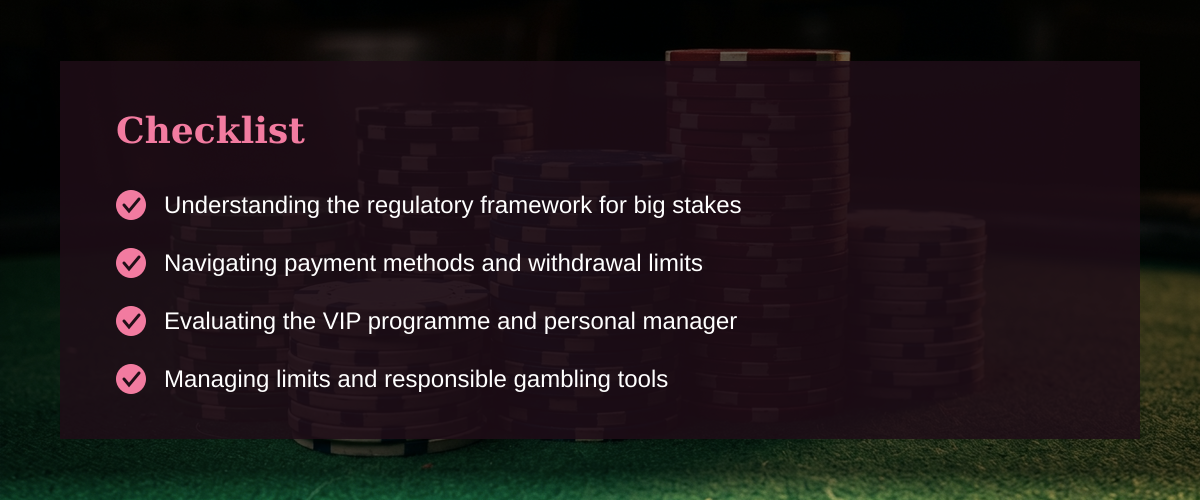
Understanding the regulatory framework for big stakes
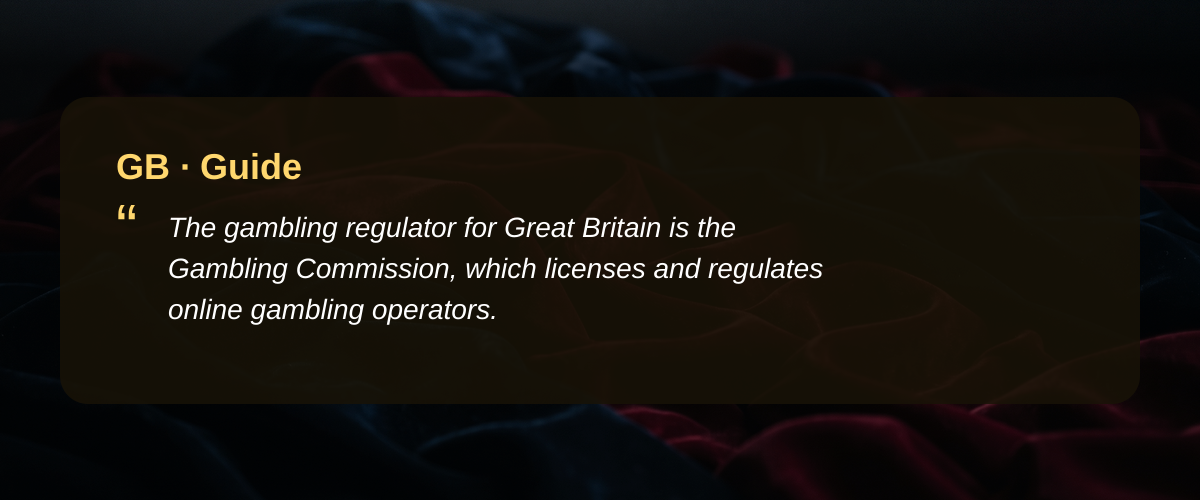
The Gambling Commission holds the keys. This body licenses and regulates online gambling operators across Great Britain, ensuring that the games are fair and the players are protected. For a high roller, this regulation is a double-edged sword. It provides security, knowing that the operator cannot simply vanish with your funds, but it also imposes rigid structures on how you can deposit and withdraw.
The Gambling Act 2005 serves as the foundation. It came fully into force in September 2007 and created the Commission as the principal regulator. Remote gambling, which includes all online casino play, falls squarely under this act. Operators serving consumers in Great Britain must hold a licence from the Commission. This point-of-consumption model means that even if a company is based overseas, it must adhere to British laws if it accepts players from here.
Credit is strictly prohibited. The Act bans giving credit in connection with gambling, and since April 2020, the use of credit cards for remote gambling has been banned. This changes how we manage our bankrolls. I rely on debit cards, PayPal, and other direct methods. There is no borrowing against future wins. You play with what you have in the account, which adds a layer of discipline that some might find stifling but I find clarifying.
Taxation is another area where the UK differs from other jurisdictions. Winnings from gambling are not taxed as income for the player. The tax burden falls on the operators under the point-of-consumption model. This means my net win is exactly what hits my bank account. There is no need to set aside a portion for HMRC. This simplicity is a major advantage for those of us tracking large fluctuations in our balance.
Navigating payment methods and withdrawal limits
Liquidity is king. A VIP programme is worthless if you cannot access your winnings quickly. The market offers several dominant payment methods that cater to different needs. Debit cards remain the most common, offering direct links to bank accounts. PayPal provides a layer of separation and speed, while Apple Pay allows for quick mobile transactions. Paysafecard offers anonymity for deposits, though it is less useful for withdrawals.
Withdrawal limits are where the real test begins. Many operators impose daily, weekly, or monthly caps on how much you can take out. For a casual player, a £5,000 weekly limit might seem generous. For me, it is an inconvenience. I look for platforms that offer higher thresholds or bespoke arrangements for verified VIPs. These limits are often tied to the standard licensing requirements rather than the specific needs of high-volume players.
Processing times vary significantly. Some operators process withdrawals within hours, while others drag their feet for days. The key is to check the terms before you deposit. A delay of 24 hours is acceptable for security checks. A delay of five days is a sign of poor cash flow management or intentional friction. I prefer operators who conduct verification upfront, so that when I request a withdrawal, the only hurdle is the banking network itself.
Financial vulnerability checks are now part of the landscape. Since February 2025, remote licensees must run these checks on customers with net deposits exceeding £150 in a rolling 30-day period. This is designed to protect players from harm, but for high rollers, it means providing more documentation. Income sources, bank statements, and proof of wealth become part of the onboarding process. It is intrusive, but necessary to maintain a licence.
Evaluating the VIP programme and personal manager
A personal manager should be a concierge, not a salesperson. Too many VIP schemes assign account managers whose primary goal is to keep you depositing. I look for managers who understand service. They should resolve issues quickly, arrange exclusive bonuses, and provide insights into new games or events. If my manager contacts me only when I have been quiet for a week, the programme is failing.
The value of a VIP programme lies in its exclusivity and relevance. Generic rewards like free spins on low-stake slots are insulting to a high roller. I expect invitations to real-world events, such as major horse racing meetings or football finals. Access to high-limit tables that are closed to the general public is another key benefit. These perks create an experience that goes beyond the digital screen.
Responsiveness is critical. When I have a question about a bet or a transaction, I expect an answer within minutes, not hours. A dedicated manager should have the authority to make decisions without escalating every issue to a support team. This level of autonomy distinguishes a true VIP service from a marketing label. It shows that the operator values my time as much as my money.
Transparency in rewards is essential. I want to know exactly what I need to do to reach the next tier and what benefits that tier brings. Hidden criteria or moving goalposts erode trust. The best programmes have clear, published structures that allow me to plan my play. This clarity reduces friction and allows me to focus on the game rather than the mechanics of the loyalty scheme.
Managing limits and responsible gambling tools
Self-control is a professional requirement. The UK market provides robust tools to help players manage their gambling. GamStop is the national online self-exclusion scheme. Since March 2020, all licensed online operators must join this scheme. It allows players to exclude themselves from all participating sites for a set period. This is a powerful tool for those who need a break, and its mandatory nature ensures comprehensive coverage.
Deposit limits are another standard feature. Operators must offer customers the ability to set these limits. From June 2026, all online operators must provide a deposit-limit option based solely on money paid into the account over a set period. This change aims to make limits more intuitive and effective. For a high roller, setting these limits requires careful consideration of your budget and risk tolerance.
Time-out functionality and activity statements are also mandatory. These tools allow players to take short breaks and review their spending patterns. I use activity statements to track my performance and ensure I am staying within my planned budget. Reality checks, which prompt players after a certain amount of time, are less used but can be helpful for maintaining awareness during long sessions.
The statistics show that these tools are underutilised. In a Consumer-protection survey, only 8% of gamblers had used financial limits and 5% had used reality checks. Only 6% had ever self-excluded. This suggests that many players rely on internal discipline rather than external tools. For high stakes play, combining internal discipline with these mandatory safeguards creates a safer and more sustainable approach.
Assessing game variety and stake limits
Game selection must match the stakes. Standard slots often have low maximum bets, which limits their appeal to high rollers. I look for games with higher stake limits, particularly in live dealer sections. Live blackjack, baccarat, and roulette tables with high maximum bets provide the thrill and potential returns that justify the risk. The presence of these tables is a strong indicator of an operator's commitment to the high-end market.
Mandatory online slot stake limits apply in Great Britain. Players aged 18 to 24 are limited to £2 per spin, while those aged 25 and over are limited to £5 per spin. These limits reduce the volatility and potential loss rate for slot players. For high rollers who prefer slots, this means spreading bets across more spins or seeking out games with higher return-to-player percentages to maximise value within the constraints.
Software quality matters. Top-tier providers offer smoother gameplay, better graphics, and more reliable random number generators. I prefer platforms that host games from established developers known for their integrity and innovation. The technical performance of the game should be flawless, with no lag or glitches that could affect the outcome of a bet. This reliability is non-negotiable when large sums are at stake.
Live dealer experiences bridge the gap between online and land-based casinos. The interaction with real dealers and other players adds a social element that pure software games lack. High-quality streams with multiple camera angles and professional dealers enhance the immersion. Operators who invest in premium live casino studios demonstrate a commitment to providing a superior experience for their high-value customers.
Comparing the high-roller experience to the broader market
The mass market focuses on volume. Operators target thousands of small-stake players, optimising their platforms for ease of access and broad appeal. Bonuses are generic, and support is automated. This model works for the majority but fails to meet the needs of those who play at a higher level. The high-roller experience is defined by personalisation, exclusivity, and higher limits.
In the broader market, withdrawal times can be slow due to the volume of transactions. High rollers often benefit from priority processing, which speeds up access to funds. Customer support for the mass market is typically via chatbots or email queues. VIP players receive direct access to human agents who can resolve complex issues quickly. This difference in service quality is stark and significant.
Bonus structures also differ. Mass-market bonuses come with high wagering requirements and low maximum bet limits. VIP bonuses are often tailored, with lower wagering requirements or no wagering at all. They may include cashback on losses or exclusive tournament entries. These rewards are designed to retain high-value players by offering tangible value rather than just promotional fluff.
The regulatory impact is felt differently across the spectrum. For casual players, affordability checks and stake limits are minor inconveniences. For high rollers, they are significant operational factors. Managing documentation and adhering to stricter limits requires more effort. However, this regulatory scrutiny also ensures that the operators serving this segment are financially stable and compliant, reducing the risk of fraud or insolvency.
Final thoughts on choosing the right platform
Selecting a casino for high-stakes play requires due diligence. Do not be swayed by flashy advertising or large welcome bonuses. Look at the underlying infrastructure: the licensing, the payment methods, the withdrawal limits, and the quality of the VIP service. Read independent analyses to gauge the reputation of the operator. For instance, checking spindog casino reviews can provide insights into how different platforms handle high-volume players and what pitfalls to avoid.
The ideal platform balances regulatory compliance with customer-centric service. It should offer a wide range of high-limit games, fast and reliable payments, and a VIP programme that delivers genuine value. The personal manager should be proactive and empowered to solve problems. Transparency in terms and conditions is crucial to avoid surprises later on.
Responsible gambling is integral to sustained play. Use the tools provided by the operator and the regulator to manage your activity. Set limits that align with your financial situation and stick to them. Self-exclusion via GamStop is available if you need a break. Remember that gambling should be entertaining, not a source of financial stress.
The market in Great Britain is mature and well-regulated. This provides a safe environment for high-stakes play, provided you choose your operator wisely. Focus on the details that matter to you: speed, service, and limits. Ignore the noise and concentrate on the quality of the experience. A true VIP environment respects your status and facilitates your play without unnecessary friction.
Playing casino games as a high-stakes punter in Great Britain
I do not chase small wins. The table must respect the size of my stake, and the service must match the weight of my wallet. When I decide to play casino games, I look for an environment that understands the difference between a casual flutter on the horses and a serious session at the baccarat table. The market in Great Britain is crowded, yet few operators truly grasp the nuances required by those of us who move significant sums.
The luxury is not just in the gold-plated interface or the exclusive invites. It lies in the frictionless nature of the transaction and the absolute clarity of the rules. I need to know that when I win, the money arrives without unnecessary hurdles or delays. The regulatory framework here is strict, which is good for safety but can feel restrictive if you do not understand how it applies to large volumes of play.
My perspective comes from years of sitting at the sharp end of the industry. I have seen VIP programmes that promise the world and deliver nothing but automated emails. I have also encountered managers who anticipate my needs before I voice them. This piece breaks down what actually matters when you are playing with serious money in the UK market.
Understanding the regulatory framework for big stakes
The Gambling Commission holds the keys. This body licenses and regulates online gambling operators across Great Britain, ensuring that the games are fair and the players are protected. For a high roller, this regulation is a double-edged sword. It provides security, knowing that the operator cannot simply vanish with your funds, but it also imposes rigid structures on how you can deposit and withdraw.
The Gambling Act 2005 serves as the foundation. It came fully into force in September 2007 and created the Commission as the principal regulator. Remote gambling, which includes all online casino play, falls squarely under this act. Operators serving consumers in Great Britain must hold a licence from the Commission. This point-of-consumption model means that even if a company is based overseas, it must adhere to British laws if it accepts players from here.
Credit is strictly prohibited. The Act bans giving credit in connection with gambling, and since April 2020, the use of credit cards for remote gambling has been banned. This changes how we manage our bankrolls. I rely on debit cards, PayPal, and other direct methods. There is no borrowing against future wins. You play with what you have in the account, which adds a layer of discipline that some might find stifling but I find clarifying.
Taxation is another area where the UK differs from other jurisdictions. Winnings from gambling are not taxed as income for the player. The tax burden falls on the operators under the point-of-consumption model. This means my net win is exactly what hits my bank account. There is no need to set aside a portion for HMRC. This simplicity is a major advantage for those of us tracking large fluctuations in our balance.
Navigating payment methods and withdrawal limits
Liquidity is king. A VIP programme is worthless if you cannot access your winnings quickly. The market offers several dominant payment methods that cater to different needs. Debit cards remain the most common, offering direct links to bank accounts. PayPal provides a layer of separation and speed, while Apple Pay allows for quick mobile transactions. Paysafecard offers anonymity for deposits, though it is less useful for withdrawals.
Withdrawal limits are where the real test begins. Many operators impose daily, weekly, or monthly caps on how much you can take out. For a casual player, a £5,000 weekly limit might seem generous. For me, it is an inconvenience. I look for platforms that offer higher thresholds or bespoke arrangements for verified VIPs. These limits are often tied to the standard licensing requirements rather than the specific needs of high-volume players.
Processing times vary significantly. Some operators process withdrawals within hours, while others drag their feet for days. The key is to check the terms before you deposit. A delay of 24 hours is acceptable for security checks. A delay of five days is a sign of poor cash flow management or intentional friction. I prefer operators who conduct verification upfront, so that when I request a withdrawal, the only hurdle is the banking network itself.
Financial vulnerability checks are now part of the landscape. Since February 2025, remote licensees must run these checks on customers with net deposits exceeding £150 in a rolling 30-day period. This is designed to protect players from harm, but for high rollers, it means providing more documentation. Income sources, bank statements, and proof of wealth become part of the onboarding process. It is intrusive, but necessary to maintain a licence.
-
[*]Debit cards offer direct and reliable access to funds without credit implications.
[*]PayPal provides a fast and secure layer between your bank and the casino.
[*]Apple Pay ensures quick transactions for mobile-focused players.
[*]Paysafecard allows for controlled deposit amounts without sharing bank details.
[*]Bank transfers remain the standard for moving very large sums securely.
Evaluating the VIP programme and personal manager
A personal manager should be a concierge, not a salesperson. Too many VIP schemes assign account managers whose primary goal is to keep you depositing. I look for managers who understand service. They should resolve issues quickly, arrange exclusive bonuses, and provide insights into new games or events. If my manager contacts me only when I have been quiet for a week, the programme is failing.
The value of a VIP programme lies in its exclusivity and relevance. Generic rewards like free spins on low-stake slots are insulting to a high roller. I expect invitations to real-world events, such as major horse racing meetings or football finals. Access to high-limit tables that are closed to the general public is another key benefit. These perks create an experience that goes beyond the digital screen.
Responsiveness is critical. When I have a question about a bet or a transaction, I expect an answer within minutes, not hours. A dedicated manager should have the authority to make decisions without escalating every issue to a support team. This level of autonomy distinguishes a true VIP service from a marketing label. It shows that the operator values my time as much as my money.
Transparency in rewards is essential. I want to know exactly what I need to do to reach the next tier and what benefits that tier brings. Hidden criteria or moving goalposts erode trust. The best programmes have clear, published structures that allow me to plan my play. This clarity reduces friction and allows me to focus on the game rather than the mechanics of the loyalty scheme.
Sitat
"Treat your VIP manager as a partner in your gaming experience, not just a contact for complaints. Clear communication about your preferences and limits helps them tailor the service to your needs."
Managing limits and responsible gambling tools
Self-control is a professional requirement. The UK market provides robust tools to help players manage their gambling. GamStop is the national online self-exclusion scheme. Since March 2020, all licensed online operators must join this scheme. It allows players to exclude themselves from all participating sites for a set period. This is a powerful tool for those who need a break, and its mandatory nature ensures comprehensive coverage.
Deposit limits are another standard feature. Operators must offer customers the ability to set these limits. From June 2026, all online operators must provide a deposit-limit option based solely on money paid into the account over a set period. This change aims to make limits more intuitive and effective. For a high roller, setting these limits requires careful consideration of your budget and risk tolerance.
Time-out functionality and activity statements are also mandatory. These tools allow players to take short breaks and review their spending patterns. I use activity statements to track my performance and ensure I am staying within my planned budget. Reality checks, which prompt players after a certain amount of time, are less used but can be helpful for maintaining awareness during long sessions.
The statistics show that these tools are underutilised. In a Consumer-protection survey, only 8% of gamblers had used financial limits and 5% had used reality checks. Only 6% had ever self-excluded. This suggests that many players rely on internal discipline rather than external tools. For high stakes play, combining internal discipline with these mandatory safeguards creates a safer and more sustainable approach.
Assessing game variety and stake limits
Game selection must match the stakes. Standard slots often have low maximum bets, which limits their appeal to high rollers. I look for games with higher stake limits, particularly in live dealer sections. Live blackjack, baccarat, and roulette tables with high maximum bets provide the thrill and potential returns that justify the risk. The presence of these tables is a strong indicator of an operator's commitment to the high-end market.
Mandatory online slot stake limits apply in Great Britain. Players aged 18 to 24 are limited to £2 per spin, while those aged 25 and over are limited to £5 per spin. These limits reduce the volatility and potential loss rate for slot players. For high rollers who prefer slots, this means spreading bets across more spins or seeking out games with higher return-to-player percentages to maximise value within the constraints.
Software quality matters. Top-tier providers offer smoother gameplay, better graphics, and more reliable random number generators. I prefer platforms that host games from established developers known for their integrity and innovation. The technical performance of the game should be flawless, with no lag or glitches that could affect the outcome of a bet. This reliability is non-negotiable when large sums are at stake.
Live dealer experiences bridge the gap between online and land-based casinos. The interaction with real dealers and other players adds a social element that pure software games lack. High-quality streams with multiple camera angles and professional dealers enhance the immersion. Operators who invest in premium live casino studios demonstrate a commitment to providing a superior experience for their high-value customers.
Comparing the high-roller experience to the broader market
The mass market focuses on volume. Operators target thousands of small-stake players, optimising their platforms for ease of access and broad appeal. Bonuses are generic, and support is automated. This model works for the majority but fails to meet the needs of those who play at a higher level. The high-roller experience is defined by personalisation, exclusivity, and higher limits.
In the broader market, withdrawal times can be slow due to the volume of transactions. High rollers often benefit from priority processing, which speeds up access to funds. Customer support for the mass market is typically via chatbots or email queues. VIP players receive direct access to human agents who can resolve complex issues quickly. This difference in service quality is stark and significant.
Bonus structures also differ. Mass-market bonuses come with high wagering requirements and low maximum bet limits. VIP bonuses are often tailored, with lower wagering requirements or no wagering at all. They may include cashback on losses or exclusive tournament entries. These rewards are designed to retain high-value players by offering tangible value rather than just promotional fluff.
The regulatory impact is felt differently across the spectrum. For casual players, affordability checks and stake limits are minor inconveniences. For high rollers, they are significant operational factors. Managing documentation and adhering to stricter limits requires more effort. However, this regulatory scrutiny also ensures that the operators serving this segment are financially stable and compliant, reducing the risk of fraud or insolvency.
Final thoughts on choosing the right platform
Selecting a casino for high-stakes play requires due diligence. Do not be swayed by flashy advertising or large welcome bonuses. Look at the underlying infrastructure: the licensing, the payment methods, the withdrawal limits, and the quality of the VIP service. Read independent analyses to gauge the reputation of the operator. For instance, checking spindog casino reviews can provide insights into how different platforms handle high-volume players and what pitfalls to avoid.
The ideal platform balances regulatory compliance with customer-centric service. It should offer a wide range of high-limit games, fast and reliable payments, and a VIP programme that delivers genuine value. The personal manager should be proactive and empowered to solve problems. Transparency in terms and conditions is crucial to avoid surprises later on.
Responsible gambling is integral to sustained play. Use the tools provided by the operator and the regulator to manage your activity. Set limits that align with your financial situation and stick to them. Self-exclusion via GamStop is available if you need a break. Remember that gambling should be entertaining, not a source of financial stress.
The market in Great Britain is mature and well-regulated. This provides a safe environment for high-stakes play, provided you choose your operator wisely. Focus on the details that matter to you: speed, service, and limits. Ignore the noise and concentrate on the quality of the experience. A true VIP environment respects your status and facilitates your play without unnecessary friction.